EFFECTIVE INTERVIEWING
Faculty Lecture
Required Reading
No required reading for this section
2
Principles of Interviewing
1. Adhere to the Child First Doctrine
| CHILD FIRST DOCTRINE | |
| The child is our first priority. Not the needs of the family. Not the child's "story." Not the evidence. Not the needs of the courts. Not the needs of police, child protection, attorneys, etc. The child is our first priority. |
Ann Ahlquist and Bob Ryan, 1993
2. Allow the competence of the child
It is the interviewer's responsibility to allow the child to communicate at his/her maximum level. For this to occur, the interviewer must conduct the interview consistent with the child's developmental abilities.
3. Interviewing is both a Science and an Art
3
Interviewing - Science? or Art? or...?*
Is interviewing a science, requiring specialized knowledge, a base of research, a methodical approach and skilled application? Yes.
Is interviewing an art, guided by intuition and creativity; influenced by the interviewer's emotions, beliefs and background and performed better by those with a flair for empathy? Yes.
Interviewing child victims of sex abuse is a difficult and emotionally charged task. Interviewers must be up to the task with carefully developed skills, current and complete knowledge and a feel and talent for communicating with children.
On the side of science, good interviewers are very aware of the dynamics of sexual abuse of child victims. They are familiar with children's developmental stages and the emotional and rational skills associated with each stage. They use a carefully planned strategy designed to build rapport, to support children's confidence and to enable clear, accurate exchange of information.
On the side of art, good interviewers develop a sensitivity to the nuances of children's behavior, body language, facial expressions and words. They are aware to their own feelings about sexual abuse. They rely on their instincts to maintain a comfort level with children*which gives children a sense of control and safety.
Interviewing child victims of sexual abuse is both a science and an art. If you're going to be a good interviewer you can't be merely a technician. Nor can you be merely a warm, sensitive person. You must combine the skills, knowledge and techniques of the scientist with the talent, natural "people abilities" and emotional awareness of the artist.
Know Yourself
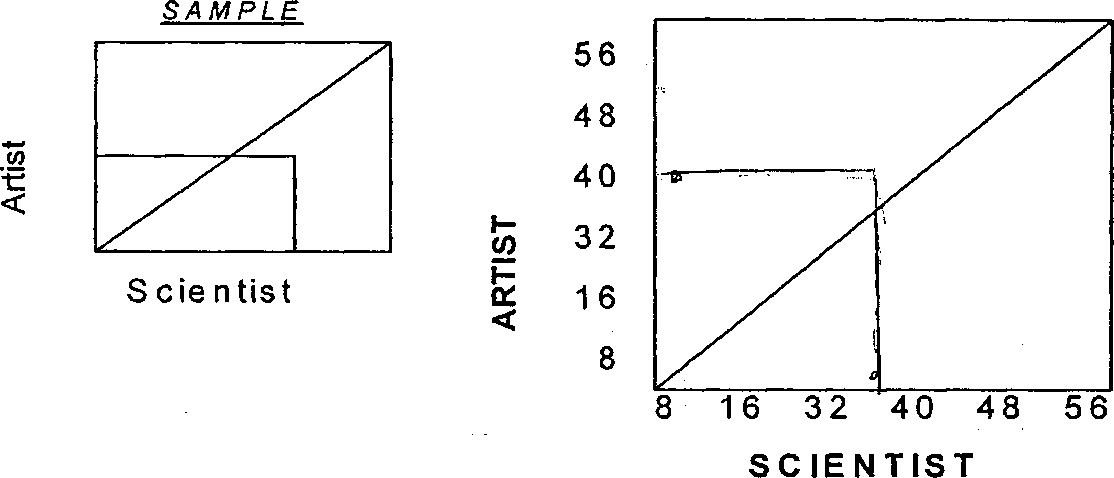
It might be a good idea for you to know on which side of the science/art continuum you are most comfortable and to which side you might need to pay special attention as you go through this course. Read the statement on the next page and circle the numbers that best describe your level of agreement or comfort.
*From:
Ahlquist, A. & Ryan B. (1993). Interviewing Children Reliably and Credibly
4
| Scientist/Artist Continuum | |||||
| Strongly Agree | Agree | Disagree | Strongly Disagree | ||
| 7 | 5 | 3 | 1 | 1. | I frequently communicate with children in normal circumstances |
| 7 | 5 | 3 | 1 | 2. | I have taken some college level courses in child development. |
| 1 | 3 | 5 | 7 | 3. | I feel awkward playing children's games. |
| 1 | 3 | 5 | 7 | 4. | Following steps and rules in an interview taints the quality of the responses. |
| 7 | 5 | 3 | 1 | 5. | I experienced some trauma myself as a child. |
| 1 | 3 | 5 | 7 | 6. | A good investigator already knows how to be a good interviewer of kids. |
| 7 | 5 | 3 | 1 | 7. | I like going to children's movies. |
| 7 | 5 | 3 | 1 | 8. | I have read at least three biographies of victims of trauma. |
| 1 | 3 | 5 | 7 | 9. | Being around children makes me nervous. |
| 7 | 5 | 3 | 1 | 10. | I try to read all I can on such subjects as trauma, abuse, delayed stress syndrome, etc. |
| 7 | 5 | 3 | 1 | 11. | I can remember many childhood memories. |
| 7 | 5 | 3 | 1 | 12. | Kids tend to seek me out in a group of adults. |
| 1 | 3 | 5 | 7 | 13. | I just don't understand today's teenagers. |
| 7 | 5 | 3 | 1 | 14. | The structure of an interview is really secondary to building a good relationship. |
| 7 | 5 | 3 | 1 | 15. | I try to really learn from prosecuting and defense attorneys, judges and police officers. |
| 7 | 5 | 3 | 1 | 16. | I have watched myself conducting interviews on videotape. |
Scoring:
Add the numbers you circled for #s 1, 3, 5, 7, 9, 12, 13 and write the total in the space to the right.
_____ Artist
Add the numbers you circled for #s 2, 4, 6, 7, 10, 14, 15, 16 and write the total in the space to the right.
_____ Scientist
5
Now plot the first total on the vertical axis and the second on the horizontal as in the example. Draw a dotted line perpendicular to each axis from the plotted point until they meet in the grid. Did you score really high on one axis and low on another? Use this workbook, your peers and other resources to help you round out the side of the continuum on which you're a bit low. Did you do well on both? Great! Keep working to assure you remain a well rounded interviewer. If you scored really low on both, reexamine your desire to become an interviewer of child victims of trauma. Are you willing to commit yourself to personal and professional growth and development?
Interviewing is One Part of a Bigger Picture
"The interview" is an event with a beginning and an end. Discovery of child sexual abuse, however, is a process. The process began well before you or I ever came into the picture, before the sexual abuse in question took place, before the child victim was born. The process was born out of our legal, social and medical systems which have evolved numerous laws, regulations and procedures for dealing with suspected cases of child abuse.
In terms of the current situation, by the time you are seated in an interview room with that child, many other people may have become involved.
6
The interviewing process is truly a multidisciplinary concern. Many different people have an interest in the process - what the outcome will be. Often, it seems as if we all want the process to do something different, but actually, we all have two major things in common. We all want to know about the child's experience. Was the child abused or not? And we all must rely on the competence of the child to find out.
The purpose of the interview is to allow the competence of the child (see shaded box). The interview process is structured so as to maximize the child's abilities to communicate his experiences. The child's physical and emotional well-being may very well depend on allowing that competence. The usefulness of the process to all the varied disciplines we mentioned above is directly dependent on allowing that competence. The interviewer's primary objective in striking that delicate balance of science and art is to allow the child's competence.
"To allow the competence of the child" may be lacking grammatically, but the phrase is very descriptive. The process gently establishes the child's rational, emotional and communicative skills, so that the interview is conducted at a level consistent with his developmental abilities. The result is information which is reliable, specific and difficult to challenge.
7
Types of Child Sexual Abuse Interviews
1. Medical Model
2. Psychosocial or Clinical
3. Forensic or Investigative
8
Interviewing
Versus
Interrogating*
Interrogation
Interview
*Adapted from:
LT. Bill Walsh, Dallas, TX
9
Videotaping Child Sexual Abuse Interviews
Arguments FOR Videotaping
Arguments AGAINST Videotaping
10
Videotaping
Child Sexual Abuse Interviews
(j) ...The following interviewing methods and procedures must be used whenever possible when collecting information:
(1) audio recordings of all interviews with witnesses and collateral sources; and
(2) in cases of alleged sexual abuse, audio-video recordings of each interview with the alleged victim and child witnesses.
Section 2 [13.82] [Videotapes of Child Abuse Victims'.]
(a) ...an individual data subject of data may not obtain a copy of a videotape in which a child victim or alleged victim is alleging, explaining, denying or describing an act of physical or sexual abuse without a court order under section 13.03, subdivision 6, or 611A.90.
end
American Prosecutors Research Institute 2004 CornerHouse
Finding Words Training Manual