WHATEVER HAPPENED TO CORROBORATION ANYWAY?
Faculty Lecture
Required Reading
Vieth, V. (1997). When a child testifies: Getting the jury to believe the victim. Update, 10(10)
Lyon, T., & Saywitz, K. (1999). Young mistreated children's competence to take the oath. Applied Developmental Science, 30), 16-27.
2
What Ever Happened To Corroboration?
Allie Phillips
Senior Attorney
APRI's National Child Protection Training Center
Alexandria, VA 22314
703.518.4385
allie.phillips@ndaa-apri.org"
Examine the Child's Statements for Clues
Search "Warrants
WAYS TO CORROBORATE A CHILD SEXUAL ABUSE VICTIM'S STATEMENT
TYPES OF PHYSICAL EVIDENCE
Minute and latent evidence: Seminal fluid, sperm, hair, and fibers may be found in the child's bedsheets, pillowcases, and pajamas.
Lures: Toys, games, stuffed animals, music, any gift that would entice the child into the situation or to try to maintain the child's interest in the perpetrator.
Images: Photographs of children (scanned, downloaded and morphed), videotapes of children, computer hard drives, discs, DVDs, magazines.
3
Child erotica: Child erotica is any material relating to children that a person may find sexually arousing; some of the more common types are child sketches, fantasy writings, diaries, sexual aids.
- Catalogue photos of children, child sketches, fantasy writings, diaries, sexual aids.
Child pornography: Articles or photos depicting sexually explicit conduct involving a child. Adult pornography: These might be shown to the child.
Email transmissions: Open header information, get ISP owner information through www.whois.com, then serve search warrant on the ISP for who was assigned the IP number for that transmission.
Souvenirs: Small items, such as locks of hair, barrettes, panties, or pubic hairs may have been taken by the suspect to remember the sexual activity, or the child may have left pictures, drawings, letters, e-mails, clothing, or toys with the suspect.
Sexual aids or devices: The suspect may have used petroleum jelly or other lubricants, condoms, dildos, vibrators, or contraceptive foam or jelly with the child.
Drugs or alcohol: Evidence of the use of such substances by the suspect may be in a corroborating statement.
Evidence of violence: This type of evidence might include such things as broken lamps and holes in walls or furnishings or weapons.
DOCUMENTING THE CRIME SCENE
MEDICAL EVIDENCE
4
Perpetrator Interviews
Other Individual's Statements
Phone Stings
5
Reprinted with permission from:
Vieth, V. (1999). When a child stands alone: The
search for corroborating evidence. Update. 12(6).
When a Child Stands Alone: The Search for Corroborating Evidence
by Victor I. Vieth1
The outcome of many child abuse cases is determined by an evaluation of the child's credibility.2 When a victim believes her testimony is the state's only evidence, the child experiences exacerbated stress.3 When a child's statement stands alone, it is easier for the defense attorney to attack the child's allegation on memory and suggestibility grounds.4
To reduce the child's stress, strengthen the government's case, and ensure justice, child abuse investigators and prosecutors must find and offer the jury evidence corroborating a victim's statements. The following rules will aid in the search for corroborating evidence.
Do not think too narrowly. In many cases, investigators fail to locate corroborating physical evidence because their definition of physical evidence is too narrow. Many investigators think of physical evidence only in terms of hair, fibers, blood and semen. Since this type of physical evidence is not present in most cases of abuse, an officer confined to this narrow definition will routinely come up empty handed. Instead, an officer should think of physical evidence as any object or item that corroborates any aspect of the victim's report of abuse.
Search the victim's statement for clues. If the victim's statement is audio or video recorded, transcribe the statement. Working as part of a multi-disciplinary team, tear the statement apart sentence by sentence, word by word. After each line of the transcript, consider whether there is anything in the sentence that can be corroborated. Even in brief interviews, a child abuse victim may be asked hundreds of questions that produce a large amount of information.5
If the victim says her father read a particular bedtime story before the sexual encounter, search the suspect's house and seize the book. If the child describes her house as being blue, photograph the house to document the child is accurate in her description of its color. If a child claims he was sexually abused by his grandfather during a camping/fishing trip, find evidence documenting the trip. There may be a campground registration or photographs of the trip. Search the grandfather's house for a tent, camping equipment, fishing rod, etc. If a child says she missed school as a result of abuse, obtain the attendance records. If a child claims a particular song was playing on the radio during the abuse, go to the radio station and obtain a copy of the play list.
When child abuse investigators define "physical evidence" more broadly, corroborating physical evidence can be found in most cases.5
Do not assume a victim's statement cannot be corroborated. A young child may be developmentally incapable of giving a coherent answer to every question posed to her.7
6
When this happens, an officer may be tempted to use the child's inability as an excuse not to investigate. In one case, a three-year-old girl told an officer she was molested at a neighbor's house. The child said the abuse took place in a room with the "gigantic eagle." The officer did not believe the suspect had a gigantic eagle in his house but he searched the residence nonetheless. In the suspect's bedroom, the officer found a bedspread depicting a large eagle. The room was photographed and the bedspread was seized as evidence. By investigating and not summarily discounting the child's statement, the officer was able to enhance the credibility of the child. If the officer had failed to examine the crime scene, a defense attorney could have attacked the victim as a child who fantasizes about gigantic eagles. The defense attorney may have asked the jury "what else is she fantasizing about?"
Search for evidence that brings the crime to life. Seize clothing or other items that brings the crime home to the jury as a real event. If a child claims her father reached under her Winnie-the-Pooh pajamas and fondled her vagina, seize the pajamas and put the clothing into evidence. The pajamas document the small stature of the child at the time of the abuse and the ease with which a perpetrator could reach beneath the garment for sexual purposes. More importantly, the pajamas will make the assault less abstract for the jury. When the jurors see and touch the pajamas, it puts them at the scene of the crime and allows them to picture the child's ordeal. This is why thousands of Americans flock to museums to be near Babe Ruth's bat, Judy Garland's ruby slippers, or remnants of the Titanic. Seeing the item connects us to an individual or an event in a powerful, personal way.
There is always a crime scene. The location of the child's victimization is a crime scene that needs to be inspected. Even if there is no reason to believe that blood, semen or other evidence can be found at the site of the abuse, the crime scene must be photographed. The photographs will give the jury a picture of the child's world. If the child's room is barren and completely lacking in toys, decorations and color, the jury may sense the coldness of the child's environment. If the room is decorated with the trimmings and trappings of childhood, the jury may sense the lost innocence that took place in the room. The photographs can also be used to aid the child's testimony. For instance, the child can use the photographs to point to locations in the house where various acts took place.
In addition to photographing the crime scene, check the room to determine the ease with which abuse could take place undetected. Is there a working lock on the child's door? How far is the child's room from other sleeping quarters in the house? How thick are the walls? Thick walls may explain a father's boldness in abusing a child while others are awake. If the walls are the equivalent of paper, the child's statement "daddy told me not to make a noise" is all the more compelling.
Search for evidence of motive. Many abused children love their perpetrators and have expressed their love by drawing pictures, sending letters, and making projects for them. Look for these drawings or projects in the suspect's house and place of work. A child's artwork is often displayed on refrigerators and office doors. Find out what present the child made or gave her father on a special occasion such as a birthday, Christmas celebration, or Father's Day. Artwork and other expressions of affection document that the child has no incentive to falsely accuse the suspect. A prosecutor may be able to place these items into evidence to show the child's state of mind at the time the project was made.8 A prosecutor can then argue to the jury: "if you have ever been in love, you know this to be true. Rational human begins do not commit perjury in order to send to prison someone they love. The child's artwork proves she is not trying to hurt her father. She simply wants a father who doesn't hurt her."
7
Use the suspect to corroborate the victim's statement. Even if the defendant is adamant in denying the abuse, the will often admit many of the important details surrounding the abuse. If the victim gave the police one hundred pieces of information and you can show through the defendant, that at least ninety percent of the information is accurate, this enhances the child's credibility. Just as you did with the victim's statement, transcribe the interview with the suspect and take it apart line by line. Investigate any claims made by the defendant to see if they are true. If the investigator finds wives and girlfriends who refute the defendant's claim of impotency, the prosecutor can now show the defendant to be a liar and the jury may wonder what else the accused has lied about. Beyond this, make a concerted effort to obtain an outright confession from the suspect. Properly trained investigators can and do obtain confessions in a high percentage of child abuse cases.9 To assist investigators, APPJ's National Center for Prosecution of Child Abuse trains investigators throughout the country in the art of obtaining a confession in a child abuse case that will withstand scrutiny on appeal. For further information about course offerings, call the Center at (703) 549-4253.
Conclusion. In the short run, it may be time consuming to thoroughly investigate a child's allegation of abuse. In the long run, however, a thorough investigation will save time. An investigation that produces corroborating evidence will enhance the child's credibility, lessen the defendant's desire to go to trial, and will hasten the arrival of justice. To a hurting child, a thorough investigation makes real the words of Aeschylus: "Take heart. Suffering, when it climbs highest, lasts but a little time."10
Senior Attorney, APRI's National Center for Prosecution of Child Abuse
2See generally, Victor I. Vieth, When a Child Testifies: Getting the Jury to Believe the Victim, 17 ABA CHILD LAW PRACTICE 22 (1998).
3John E.B. Myers, Gail S. Goodman, and Karen J. Saywitz, Psychological Research on Children as Witnesses: Practical Implications for Forensic Interviews and Courtroom Testimony, 27 PACIFIC L. JOURNAL 1, 79 (1996) (citations omitted).
4For a discussion of the propriety of such an attack, see Brian K. Holmgren, Expert Testimony on Children's Suggestibility: Should it be Admitted?, 10 APSAC ADVISOR 10 (Summer 1997).
sGina Richardson, Ph.D., a forensic linguist who specializes in children's language, advises that in the forensic interview transcripts she reviews, the average number of questions posed to a young child is 298. See Telephone interview with Gina Richardson, Forensic Linguist, Arlington, Virginia, March 31, 1999.
6See Victor I. Vieth, In My Neighbor's House: A Proposal to Address Child Abuse in Rural America, 22 HAM LINE L. REV. 143, 173-174 (1998) (discussing the success of one jurisdiction in obtaining corroborating evidence). For additional information on obtaining corroborating physical evidence, see INVESTIGATION AND PROSECUTION OF CHILD ABUSE, SECOND EDITION 104-108 (APRI's National Center for Prosecution of Child Abuse, Alexandria, VA)
8
7For a detailed analysis of the abilities of very young children, see SANDRA K. HEWITT, ASSESSING ALLEGATIONS OF SEXUAL ABUSE IN PRESCHOOL CHILDREN (1999).
8A child's out of court statement may be admitted as evidence if it pertains to the child's "then existing state of mind, emotion, sensation, or physical condition (such as intent, plan, motive, design, mental feeling, pain, and bodily health)..." FED. R. EVID. 803(3). Many of the sentiments contained in the drawings or letters of children do not fit within the definition of the hearsay rule. For instance, let use assume a child writes "Daddy, you're the greatest father in the whole world." A prosecutor who places this note into evidence is not offering it for the truth of the matter asserted. That is, the prosecutor is not offering the statement to prove the defendant is the greatest father in the world. Instead, the prosecutor is attempting to show the child has no motive to lie. Since the prosecutor is not offering the statement to prove the matter asserted in the writing, the statement is not hearsay. See FED. R. EVID. 802.
Vieth, supra note 6 at 168-172 (offering strategies an investigator can employ to obtain a confession in cases of child physical or sexual abuse).
10MAKE GENTLE THE LIFE OF THIS WORLD: THE VISION OF ROBERT F. KENNEDY (Maxwell Taylor Kennedy, Ed. 1998).
9
Child Corroboration Chart
Name ________________
Date ________________
Date of Birth ___________
Perpetrator ______________
Checklist |
Child Statement |
Corroborative Evidence |
Consent/Warrant |
|
Perpetrator |
|||
|
Location |
|||
|
Victim |
|||
|
Timing |
|||
|
School(s) |
|||
|
Weapon(s) |
|||
|
Gift(s) |
|||
|
Siblings |
|||
|
Documentation |
|||
|
Literature |
|||
|
Vehicle(s) |
|||
|
Computers) |
|||
|
Camera(s) |
|||
|
Job(s) |
10
Checklist |
>Child Statement |
Corroborative Evidence |
Consent/Warrant |
|
Phone records |
|||
Bills |
|||
Bank records |
|||
Receipts |
|||
Minute/Latent |
|||
|
Child Pornography |
|||
Adult Pornography |
|||
Child Erotica |
|||
Drugs/alcohol |
|||
Lure(s) |
|||
Stain(s) |
|||
Address book(s) |
|||
Calendar(s) |
|||
Sexual Aid(s) |
|||
Eyewitness(es) |
|||
Abuse Details |
11
Corroboration
Required Reading
12
IN PRACTICE
When a Child Testifies: Getting the Jury to Believe the Victim*
by Victor I. Vieth
An effective closing argument begins with a thorough investigation of an allegation of child abuse. Prosecutors adopting a hands-off approach to child abuse investigations are often left without the tools necessary to convince a jury of the child's veracity.
Accordingly, prosecutors need to make sure that every effort is made to corroborate a victim's statement. This means more than taking a child to a doctor and interviewing the suspect. Most cases do not produce positive medical findings and most suspects do not confess.
In most cases, though, a child's statement can be corroborated. To do so, the child's statement must be scrutinized and any aspect of the statement which can be corroborated, must be. If a child says the abuse occurred last month on a stormy night, make sure there were storms in your county last month.
I had a case where a victim recalled her approximate age when raped by a neighbor. The victim also recalled the title of a song that was playing on the radio during the rape. Our investigators were able to determine the year the song was released and discovered the release date was consistent with the child's recollection of her age at the time of the assault.
In another case, a victim recalled being raped on the night her dog was locked outside and was scratching on the basement window. Our investigators got the suspect to admit the victim owns a dog and that one night he found the dog outside and brought it into the girl's bedroom. By corroborating seemingly unimportant events such as these, investigators can enhance the credibility of the child in the eyes of the jurors.
Armed with a thorough investigation, a prosecutor may have a number of arguments at her disposal. In convincing a jury of the child's truthfulness, consider the following 10 arguments:
1. The victim testified under oath. If the child is sworn in as a witness, argue the oath gives the victim an incentive to be honest When queried in a developmentally appropriate manner, even very young children can distinguish between a truth and a lie and have an understanding that dishonesty is immoral.1
The incentive the oath gives a child to be honest can be contrasted with the impact of the oath on an accused child abuser. Unlike the child, the perpetrator has something to gain by committing perjury. A perpetrator lacks the incentive to tell the truth if doing so will ensure his conviction.
2. Not only does the oath give the child an incentive to tell the truth, the child has no incentive to lie. A prosecutor can begin to set up this argument in voir dire by asking potential jurors if they have ever been lied to. When a juror responds affirmatively, ask whether there was a reason for the lie. Most jurors agree that people lie for a reason. Remind the jury of this in your closing argument and point out the victim has no reason to lie.
For many children, the aftermath of a disclosure is so painful that recanting the allegation is preferable to telling the truth.2 In closing argument, point out the negative consequences the child suffered after her disclosure. Argue that if these consequences did not cause the child to alter her allegation, she must be telling the truth. The following argument illustrates this approach:
Does anyone believe accusing her father of incest has been fun for this child? This girl told a male police officer about sexual conduct most adults cannot speak of candidly. This girl endured an uncomfortable medical examination. This girl was removedfrom her home and placed with strangers. This girl was ostracized from her family. This girl was required to come to court and, in front of her father, tell 12 strangers what it feels like to be raped This child endured a cross-examination designed to discredit her. She's having a lot of fun isn 't she? Would any human being endure such anguish unless she was telling the truth?
3. The victim's testimony is corroborated by medical evidence. Sexually transmitted diseases or other positive medical findings obviously corroborate a victims allegation. Negative medical findings also corroborate the allegation so long as the findings are consistent with the history given by the child.2 If a child alleges sexual contact, not penetration, or contends the abuse occurred some time ago, a physician can explain the absence of an injury is consistent with the history. This testimony opens the door for the following argument:
If this six year old girl is a liar, she has remarkable foresight At the time of the original statement to the police, she was able to realize she would no doubt be compelled to undergo a medical examination.
2004 American Prosecutors Research Institute
Reprinted with permission from:
Vieth, V. (1997). When a child testifies: Getting
the jury to believe the victim. Update. 10(10).
13
Accordingly she alleged sexual conduct which would not produce medical evidence. Does that make any sense? Do you really believe the child thought that far in advance and with the degree of sophistication necessary to pull off such a lie?
4. The victim lacks the sophistication to lie convincingly. Although children lie, they are not very good at it. A child denying a theft of cookies is often given away by the crumbs on his face. When I was a little boy, my mother served me a pork chop I did not want to eat. When my mother left the dining room momentarily, I stuffed the offending food down a living room couch. When my mother returned and asked about the pork chop, I told her I ate it. When my mother asked me what happened to the bone, I quickly confessed.
Jurors experienced with children will understand the unsophisticated nature of childhood lies and will likely find appealing the following argument:
Anyone, including a child, can be a liar. This does not mean, though, that a little kid is as good a liar as a grownup. In this case, the defendant wants you to believe the victim is so sophisticated she can tell a lie believable enough to fool the police, social services, and a physician. The defendant wants you to believe this little girl is such a good liar that she can keep a consistent story intact over a period of months. Even when confronted by her assailant's attorney, this child did not wilt. Under this rationale, you are asked not only to believe this four year old kid is a liar, but that she is a darn good liar. In the history of childhood has any kid pulled off such a feat ?
5. If the child is lying, why is the lie not exaggerated? In many cases, a victim's testimony is less damning than would be expected of someone making a false accusation. For instance, a victim may allege sexual contact but deny penetration. A victim may deny her father threatened her with physical harm. Find nuggets like these in a victim's statement or testimony and cite them to the jury as evidence the child is not on a crusade to crucify the perpetrator. After all, if the child was really out to get the defendant, why not seize every opportunity to falsely accuse him? The answer, of course, is the victim is telling the truth and is willing to do so whether the truth hurts or helps the accused.
6. The victim's behavior corroborates her testimony. Although bedwetting, nightmares, and sexual behavior are not diagnostic of abuse, they may be consistent with it.4 If a behavior such as bedwetting occurs only after visits with the alleged perpetrator, the correlation is even stronger.
7. The victim's testimony is corroborated by other witnesses. Relate to the jury each portion of the child's testimony which is corroborated by another witness. For instance, if a child alleges abuse on a camping expedition, other witnesses may corroborate a claim the victim and perpetrator shared a tent together.
8. The victim's testimony is corroborated by the physical evidence. Police officers and prosecutors often think of physical evidence only in terms of semen, hair, fibers and the like. While physical evidence of this nature is often not present, other types of physical evidence may be available. I had a case where a little boy said he was abused on a fishing trip with his grandfather. When we asked, the mother produced photographs of the fishing trip. The photographs documented the existence of such a trip and, to this extent, corroborated the victim's testimony. If a victim describes drinking beer with the perpetrator or recalls the color of the room in which the abuse occurred, search the house for the presence of beer and photograph the room to verify the accuracy of the child's memory at least as to color. If denied a consensual search of the house, obtain a warrant. If denied a search warrant, certainly a witness can be found to verify the defendant drinks beer and that his bedroom is orange. Perhaps the defendant himself will concede this much.
9. The victim's testimony is corroborated by the defendant. Even if a defendant denies the allegation, there is often something to hang your hat on. Perhaps the defendants admits taking the child on a particular outing or being alone with the child at a particular time. A perpetrator may admit to a close, loving relationship with the child and agree there is no reason for the victim to fabricate.
Guilty persons often ask few questions as to a child's allegations. If permitted to play to the jury the suspect's recorded police interview, the jury may realize the defendant is not behaving innocently. You may be able to drive this point home to the jury with the following argument:
You heard the defendant's interview with the police. Did he speak to the officer in a manner consistent with innocence? If he was falsely accused would he not be demanding to see the child's statements and asking as many questions of the officer as he was answering? Isn t it obvious that the reason the defendant had no questions is because he already knew the answers? He knew he had abused this child. There is no explanation for his demeanor during the interview.
10. The Child's allegation is supported by expert testimony. Some jurisdictions have allowed experts to testify about delayed reporting, child development issues, and a host of other matters that may enhance the credibility of your child. If your jurisdiction allows this evidence, it can be cited as an additional reason the child can be believed.
When done citing to the jury the reasons to believe the child, you may wish to summarize them in a way that highlights the absurdity of any claims the child is lying. You might try something like this:
When you consider the child testified under oath, when you consider the child has no reason to lie, when you consider the child is not sophisticated enough to pull off such a convincing lie, when you consider that some or all of the child's statement is corroborated by medical personnel and other witnesses who also have no reason to fabricate, and when you consider that even the defendant corroborated portions of the victim's testimony, it is clear the defendant is guilty behond a resonable doubt.
14
In the words of Erik Erikson, "(s)omeday, maybe, there will exist a well-informed, well-considered, and yet fervent public conviction that the most deadly of all possible sins is the mutilation of a child's spirit."5 Abused children are often incapable of articulating their pain to a jury. However, when jurors are aided by a skilled investigation, case presentation, and closing argument, they can see, hear, and believe a child's mutilated spirit.
Victor I. Veith, J.D. is a Senior Attorney at the National Center for Prosecution of Child Abuse, Alexandria, VA. Endnotes
1. Lyon. Thomas D. "Assessing Children's Competence to Take the Oath: Research and Recommendations." APSAC Advisor 9, Spring 1996, 1.6.
2. See generally, Sorenson, Teena & Barbara Snow. "How Children Tell: The Process of Disclosure in Child Sexual Abuse. "Child Welfare 70. January-February 1991.
3. Medical examiners "usually cannot 'tell by looking' whether sexual molestation has or has not occurred. The history from the child remains the most important factor in making that determination..." Adams & Wells. "Normal Versus Abnormal Genital Findings in Children: How Well do Examiners Agree?" Child Abuse and Neglect 17. 1993, 663, 673.
4. See Fred Karasov and Carol Lansing, Manual For Prosecution of Child Abuse, by the Minnesota County Attorneys Association.
1995, 165.
5. Vieth, Victor I. "The Mutilation of a Child's Spirit: A Call for a New Approach to Termination of Parental Rights in Cases of Child Abuse." William Mitchell Law Review 20, 1994, 727.
15
Applied Developmental Science 1999,
Vol. 3, No. 1, 16-27
by Lawrence Erlbaum Associates,Inc
Young Maltreated Children's Competence to Take the Oath
Thomas D. Lyon
University of Southern California Law School
Karen J. Saywitz
Department of Psychiatry
UCLA School of Medicine
Harbor-UCLA Medical Center
Two studies examined 192 maltreated young children's competence to take the oath. Study 1 found that despite serious delays in receptive vocabulary, a majority of 5-year-olds correctly identified truthful statements and lies as such and recognized that lying is bad and would make authority figures mad. However, most participants up to 7 years of age could not define "truth " and "lie " or explain the difference between the terms. Four-year-olds were above chance in recognizing the immorality of lying but exhibited a tendency to identify all statements as the "truth ". Study 2 found that 4- and 5-year-olds performed above chance in identifying which of 2 story characters was lying or telling the truth and in identifying whether the truth-teller or the liar said something bad or would get in trouble. Children exhibited better understanding of the immorality of lying than the meaning of lying. Maltreated children's oath-taking competence may be underestimated due to linguistic and motivational difficulties.
Most courts in the United States and in many other countries require that witnesses understand the difference between the truth and lies and the importance of telling the truth, either as a prerequisite to taking the oath or to provide sworn testimony (Myers, 1997). These requirements have survived liberalization of the rules regarding testimonial competence. Although Rule 601 of the United States' Federal Rules of Evidence created a presumption that all persons are competent to be witnesses, Rule 603 retained the requirement that to testify, all witnesses must promise to tell the truth (Mueller & Kirkpartick, 1998). That promise is not meaningful unless the prospective witnesses understands what the truth means.
In a recent survey of a nationally representative sample of 600 prosecutors of sexual abuse, about half (41%) of the respondents stated that the testimonial competence of the child witness is an issue at trial inmost or all of their cases (Smith & Elstein, 1993). In addition to questioning at trial, children are also frequently questioned about their understanding of the meaning and morality of lying by abuse investigators (Huffman, Warren, & Frazier, 1998), and children's competence in responding to such inquiries may determine whether their subsequent statements can be repeated in court under exceptions to the rule against hearsay (Myers, 1997).
Portions of this research were presented at the 1998 meeting of the American Psychology - Law Society, Redondo Beach, CA. This research was supported by a grant from the National Center on Child Abuse and Neglect (90 - CA - 1S53). We are extremely grateful for the research assistance of Joyce Dorado, Tina Goodman-Brown, Debra Kaplan, Kimberly Schock, Michelle Dominguez, Tim Dixon, Tara Fallon, Kristina Golesorkhi, Susan Lui, Nkia Patterson and Verinder Shaw. This research would not have been possible without the support of Marcus Tucker, Richard Montes, and Michael Nash (Presiding Judges of the Los Angeles County Juvenile Court); Peter Digre and Beverly Muench (Director and Deputy Director of the Los Angeles County Department of Children's and Family Services [DCFS]); Gail Sosa and her DCFS staff in the Shelter Care area of Children's Court; the law offices of Robert Stevenson, Randy Pacheco, and Jo Kaplan (all of Dependency Court Legal Services); Larry Cory (Division Chief of the Children's Services Division of County Counsel); Rita Cregg (Director of the Child Advocates' Office), and several hundred private attorney's who represent minors in dependency court Requests for reprints should be sent to Thomas D, Lyon, University of Southern California, Law School, University Park, Los Angeles, CA 90089-0071. E-mail: tlyon@lawusc.edu_
16
The process by which young children are questioned about their understanding of the oath in the courtroom has been criticized as both too complicated and too easy. A recurring theme in developmental psychology is the potential for underestimating children's abilities due to the use of unnecessarily complicated tasks (Flavell, Miller, & Miller, 1993). Excessively complicated questioning could lead to the exclusion of child witnesses who understand the oath. On the other hand, an equally popular theme in developmental research of late concerns young children's susceptibility to leading questions (Ceci & Bruck, 1995). A leading competency evaluation could easily overestimate a child's understanding.
The first element in understanding the nature and obligation of the oath is an awareness of the difference between the truth and lies. There are a number of ways in which such awareness can be assessed. The child can be asked to (a) define "truth" and "lie", (b) explain the difference between the truth and lies, or (c) identify truthful statements and lies as such. Correct answers to any of these questions would establish understanding in a court of law.
Research examining young children's comprehension of the truth and lies suggests that identification is easier than definition. Children are able to correctly identify statements as truth or lies by 4 years of age (Bussey, 1992; Haugaard, Reppucci, Laird, & Nauful, 1991; Peterson, Peterson, & Seeto, 1983; Strichartz &Burton, 1990; Wimmer, Gruber & Pemer, 1984). Similarly, 4 -year-olds are able to identify lies as wrong (Bussey, 1992; Peterson, Peterson & Seeto, 1983). In contrast, older children asked to define the words "truth" and "lie" often have difficulty, particularly when defining "truth". Approximately half of the kindergartners in Saywitz, Jaenicke, and Camparo (1990) were unable to define "truth" and participants in Feben's study (as cited in Flin, Stevenson, & Davies, 1989) were unable to define "truth" until 7 years of age. In the only study to compare performance across tasks, Pipe and Wilson (1994) found that although 78% of 6-year-olds and 100% of 10-year-olds correctly identified a lie as such, only 17% of 6-year-olds and 72% of 10-year-olds were able to explain the difference between the terms.
Therefore asking children to define "truth" and "lie" or explain the difference between the truth and lies may understate their competence. Young children are likely to find it difficult to define words, because defining requires an abstract understanding of the proper use of a word across different contexts. "Truth" and "lie" may be particularly difficult to define, because they refer to statements rather than objects. Furthermore, defining necessitates that one generate rather than merely recognize the meaning of a word (Flavell, Miller & Miller, 1993).
Children on the witness stand may perform differently than those tested in research, particularly in child maltreatment cases. Most research on childrens' understanding of the meaning and morality of lying has examined predominantly middle-class children from non-abusive homes. Potentially important differences between children previously tested and children in court include the effects of family functioning, the child's comfort and experience with assessment, and the child's socioeconomic status. Maltreated children's performance may be adversely affected by pre-existing emotional disorders that affect concentration, motivation, self-esteem, and mood, such as clinical depression or negative psychological effects from abuse (Beitchman, Zucker, Hood, daCosta, & Akman, 1991). Moreover, maltreated children tend to lag behind nonreferred children in cognitive and linguistic development (e.g., Hoffman-Plotkin & Twentyman, 1984).
Our goals in this research were to design a simplified means by which young children's oath-taking competence may be assessed and to identify the ages at which maltreated children perform well. Previous research has neither systematically assessed children's performance across various tasks traditionally used to assess testimonial competence nor evaluated children actually appearing in court. The first study examined how apparent understanding is dependent on the type of competency questions asked. The second study followed up on several findings in Study 1, including an apparent
17
reluctance among some children to demonstrate their comprehension of lying, possible because they are sensitive to that fact that it is wrong to lie. The tasks in Study 2 were designed to minimize motivational difficulties in identifying lies and to enable us to directly compare understanding of the meaning and morality of lying.
Study 1
The purpose of Study 1 was to examine how maltreated children perform on different tasks designed to assess children's understanding of the difference between truth and lies. We wished to determine whether and to what extent children find it easier to identify truthful and false statements than to define "truth" and "lie" or to explain the difference between the terms. We thought that defining each term would be easier than explaining the difference between the terms, both because the child would be asked separately about the truth and lies and because it would facilitate defining one term as simply the negation of the other. We also assessed children's understanding of the morality of lying, in which children were asked to identify whether it was good or bad to lie, to explain their responses, and to identify whether lying made authority figures happy or mad.
Participants
Participants in Studies 1 and 2 were awaiting a court appearance in the Los Angeles County Juvenile Court, Dependency Division. Because they were drawn from the same population, we present summary information on both samples here (n-192). Each participant had been removed from the custody of his or her parent or guardian due to allegations of abuse and/or neglect and was awaiting a dependence court hearing. Particpants were not eligible if they were awaiting an adjudication hearing on the date of testing (which might require them, if they were called to testify, to answer questions regarding competence twice in 1 day), if they were officially recognized as non-English speaking, either by social services or by the Juvenile Court, or clearly incapable of communicating with the researcher in English. Children's attorneys had the right to object to their participation, but only one of several hundred attorneys did so. The ethnic composition for the two samples was 43% African American, 27% Latino, 27% White, and 4% Other (including Asian and Native American). We selected participants to ensure that the composition was comparable to the population of abused and neglected children under the care of the Los Angeles County Department of Children and Family Services (Digre, 1994).
We reviewed participants' court records (when available, «=179) to determine the type of maltreatment (Barnett, Manly, and Cicchetti, 1993). Ninety-one percent of the court petitions alleged a failure to provide, 43% alleged emotional maltreatment (predominantly exposure to domestic violence), 29% alleged physical abuse, 11% alleged moral/legal/educational maltreatment (predominantly a failure to enroll the child in school), 9% alleged sexual abuse, and 6% alleged lack of supervision. We supplemented Bamett et al.'s (1993) coding scheme with other qualitative information about the allegations: 72% of the parents had been jailed; and 27% were faulted for a dirty home. Based on participants' mothers' social service records (when available, n = 176), we found that 86% had received Aid to Families with Dependant Children (AFDC) and food stamps within the previous 5 years, and that the average household contained five persons (M= 5.42, SD = 2.34). Twenty-six percent of the participants were households with seven or more persons.
We administered the Peabody Picture Vocabulary Test - Revised (PPVT - R) to participants in both studies. The PPVT - R is a standardized test of receptive vocabulary that is highly correlated with other tests of verbal intelligence (Dunn, 1981). For purposes of calculating mean scores, we excluded the participants who were unable to complete die PPVT - R (due to interruption by court business, n = 8) or whose score was too low to assign a standardized score (i.e., below 41; n = 12). The mean standardized score of the 4-year-olds (n = 63) was 70 (SD = 16.00), 5-year-olds (n = 66) 78
18
(SD = 13.29), 6-year-olds (n = 22) 83 (SD =17.82), and 7-year-olds (w= 21) 86 (SD = 19.46). The 4-year-olds performance placed them at the level of the average child at 3 years 0 months (3-0). The age equivalents for the other age groups were 5-year-olds, 3-10; 6-year-olds, 5-3; and 7-year-olds, 6-3.
In Study 1, 96 of the 106 participants gave their assent to participate. The final sample thus consisted of 96 children, ages 4-7, with 24 children in each age group. The 4-year-olds (12 boys and 12 girls) ranged from 4-0 to 4-11 (M = 4-5), the 5-year-olds (12 boys and 12 girls) ranged from 5-1 to 5-11 (M= 5-4), the 6-year-olds (13 boys and 11 girls) ranged from 6-0 to 6-11 (M= 6-6), and the 7-year-olds (12 boys and 12 girls) ranged from 7-1 to 7-10 (M= 7-4).
Procedure
Participants were tested by one of three experimenters, one man and two women. Each experimenter tested an approximately equal number of children at each age. Each child was given five tasks: the identification task, the difference task, the definition task, the morality task and the PPVT - R. Before being given either the identification task or the difference task, the child was told that the experimenter had some surprise doors. The "surprise doors" were made of highly colored card stock, which when lifted revealed illustrations of familiar objects (e.g., ball, lion, cake). The child was told to open one of the doors, revealing a picture, and was asked to name the object. The experimenter repeated any label given by the child and told the child that they could look at the other doors.
In the identification task, the experimenter told the child that when they looked at the picture, "sometimes I'll say a lie about the picture, sometimes I'll say something true about he picture. You say when I'm telling a lie and when I'm telling the truth." The experimenter gave the child another surprise door to open, asked the child to label the object, and repeated the child's label. The experimenter asked whether it was the truth or lie if "somebody" either labeled the object as the child did or labeled the object incorrectly (e.g., when the card depicted a lion, "If somebody says that's a puppy, is that the truth or a lie?"). If the child did not say either "truth" or "lie", the experimenter repeated the question, emphasizing the choice between "truth" and "lie". Each child was given four identification task trials. We counterbalanced the stories so that the children who exhibited a response bias toward "truth" or "lie" or toward the first or last option would perform at chance level.
In the difference task, the experimenter told the child that he or she would see two surprise doors and that the child could say whether the pictures under the doors were the "same" or "different". Two sets of two doors were presented in turn and will be referred to as the "difference warm-ups." After the child opened the first two doors (a picture of a sock and a picture of a tree), the experimenter asked the child to label the objects and then said, "I want to know if the pictures are the same as each other or different from each other. Are they different or the same?" The child was asked to explain his or her answer (e.g., "What is the difference between the pictures?") and up to two follow-up questions were asked to elicit more information. The same procedure was used with a second set of two doors (two pictures of identical cars), except that the child was asked whether the pictures were "the same or different." The experimenter then told the child, "I want to know if telling a lie and telling the truth are the same as each other or different from each other. Are they different or the same?" The experimenter then asked for an explanation.
In the definition task, the experimenter introduced the child to the concept of defining terms by suggesting that they pretend the experimenter was a baby and did not know what some words meant (cf. Saywitz et al., 1990). The experimenter gave examples of definitions for "milk" and "dog" and then asked the child to define "cat" and "taking a nap". For "cat," the child was first asked if he or she knew what a cat was and then was asked, "What is a cat?" Up to two follow-up questions were asked to elicit more information. For "taking a nap," the child was first asked, "Do you know what it means to take a nap?" and then was asked, "What does it mean to take a nap?" Similar follow-up questions
19
were asked. The experimenter then asked the child, "How about telling a lie? Do you know what it means to tell a lie?" followed by "What does it mean to tell a lie?" and up to two follow-up requests for more information. The same questions were then asked for "telling the truth."
In the morality task, the experimenter showed the child four illustrations and told a brief story regarding each illustration. The illustrations depicted either a boy or girl speaking to one of four women, who were depicted as a doctor, a grandmother, a judge, or a "lady who comes to see [the child] at home" (intended to be a social worker). Both the children and the adults in the illustrations were drawn without facial expressions and without racial identification.
The experimenter introduced the child to "this girl" or "this boy" (after the first story, a "different" girl or boy) and noted that the "story child" was talking to the adult woman (doctor, grandmother, etc.). The child was told that the adult "wants to know what happened [to the story child]." The experimenter then said either that the story child tells a lie and "does not tell the truth, " or that the story child tells the truth and "does not tell any lies." The experimenter asked the child whether it was "good" or "bad" for the story child to lie/tell the truth and asked the child to explain why it was good or bad. Finally, the child was asked whether the adult would feel "happy" or "mad" if she found out that the story child told a lie/the truth. The stories were counterbalanced so that children who exhibited response biases would perform at chance level.
The tasks were counterbalanced so that half of the participants at each age received the identification task first, and half received the difference task or the definition task first. Half of the participants at each age group received the difference task before the definition task, and half received the definition task before the difference task. All children were administered the morality task after the identification, difference, and definition tasks, and all children were given the PPVT-R last.
Results
Preliminary analyses revealed no effects attributable to order, experimenter, participants' ethnicity, or participant's gender; results were collapsed across these factors for further analysis. Narrative responses that required coding (to be individually reported) were coded by a research assistant blind to the hypotheses of the study, any of the participant's identifying characteristics, and the participants' other responses. A second coder, equally blind, independently coded 25% of the narrative responses, randomly selected.
Identification task. We first tested whether children's performance improved with age and if their performance varied depending on whether they were asked to label true statements or false statements. A two-way repeated analysis of variance(ANOVA), with age as the between-subjects factor and truthfulness of the statement as the within-subjects factor, revealed a significant interaction between truthfulness and age, F(3, 92) = 3.75, p<.05, and significant main effects for age, F(3, 92) = 11.59, p<.001, and for truthfulness, F(3,92) = 3.75, p<.05. The interaction between truthfulness and age and the main effect for truthfulness were attributable to superior performance on the true statements (in which a correct response labels the statement as the "truth"), particularly among the younger children. Although the 4-year-olds were 80% correct on true statements (M= 1.6, SD = .57) and 53% correct on false statements (M= 1.06, SD = .78), matched t(23) = 2.57, p<.05; and the 5-year-olds were 92% correct on true statements (M= 1.83, SD = .38) and 81% correct on false statements (M = 1.63, SD = .71), matched r(23) = 1.31, ns, the 6-year-olds and 7-year-olds performed equally well on both types of statements (6-year-olds were 93% correct on true statements, M=1.85, SD = .35, and 98% correct on false statements, M= 1.96, SD = .20; 7-year-olds were 94% correct on true statements, M= 1.88, SD = .34, and 92 % correct on false statements, M=\.83, SD = .48). The 4-year-olds' performance on the false statements (in which a correct response labels the statements as a
20
"lie") did not exceed chance performance, t(23) = .39, ns, in contrast to the performance of the other age group son both true and false statements (all ps <.01). Performance thus improved with age, as would be expected. However, an unexpected finding was that children appeared to be more proficient at identifying trues statements than identifying lies.
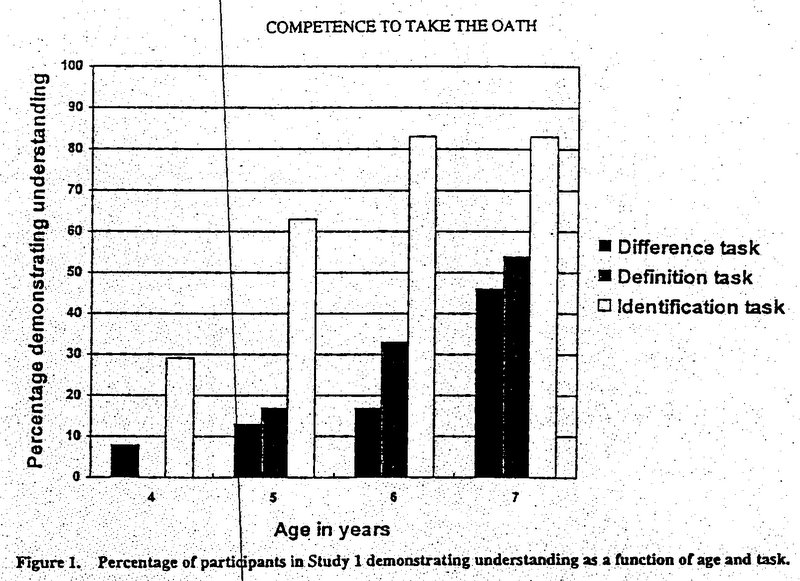
To estimate a proportion of participants at each age who exhibited good understanding, we also examined children's individual rates of responding. There is approximately a 6% probability that a child will answer four of four identification task trials correctly (with a 50% chance of answering correctly on any single trial). One would expect to see 5 or more out of 24 participants answering four of four trials correctly less than 5% of the time, by the binomial distribution. Only 29% (7) of the 4-year-olds answered four of four trials correctly, compared with 63% (15) of the 5-year-olds and 83%
(20) of both the 6- and 7-year-olds. Given children's superior group performance on truthful statements, we examined the patterns of individual responses to identify children who persistently labeled each statement as either the "truth" or a "lie"; of the 11 participants who did so, 10 labeled each statement the "truth," sign test p<.05. In sum, most children were clearly proficient at identifying truthful statements and lies by 5 years of age. However, a number of children exhibited a tendency to label all statements as the "truth".
Difference Task. We first assessed participants' general understanding of "different" and "the same." Whereas the term was used correctly by 38% (9) of the 4-year-olds, 92% (22) of the 5-year-olds used the term correctly, as did 96% (23) of the 6- and 7- year-olds. When asked whether telling a lie and telling the truth were different or the same, 52% (11) of the 4-year-olds and 63% (15) of the 5-year-olds responded accurately, not significantly different from chance by a sign test, compared with 85%
(21) of the 6-year-olds and 94% (22) of the 7-year-olds, both sign tests p<.001. Therefore, 4-year-olds exhibited little understanding of the meaning of "different," and 4- and 5-year-olds failed to correctly respond that the truth and lies are "different".
Participants' explanations were coded on a 0 -2-point scale; 2 points were awarded for either giving an example of a lie or a truth statement or defining the terms with respect to whether a statement matches reality (e.g., "Truth is what really happened"). Participants were given 1 point for referring to the consequences or morality of telling a lie or the truth, and 0 points were given for an incomprehensible response, irrelevant response, "I don't know," or lack of response. The coders agreed 96% of the time (k=.93).
We first tested for whether children's ability to explain the difference between the truth and lies improved with age. A one-way ANOVA on children's scores on the difference task with age as the between-subjects factor showed a significant effect for age, F(3,92) = 4.5,p<.01 (4-year-olds M= .46, SD = .66; 5-year-olds M= .67, SD = .70; 6-year-olds M= .67, SD = .76; 7-year olds M= 1.21, SD =.83). Examination of individual rates of responding revealed that a 0-point response was the modal response for the 4-, 5-, and 6-year-olds, whereas a 2-point response was the modal response for the 7-year-olds. Two point responses were given by 8% (2) of the 4-year-olds, 13% (3) of the 5-year-olds, 17% (4) of the 6-year-olds, and 46% (11) of the 7-year-olds. One-point responses were given by approximately one third of the participants in each age group. To summarize, very few children younger than 7 years of age were able to provide a minimally sufficient description of the difference between the truth and lies, and only about half of the 7-year-olds were able to do so.
Definition Task. Participants were asked whether they knew what the terms meant before they were asked to define them. Eighty-nine percent claimed to know the meaning of the "truth," whereas 79% claimed to know the meaning of "lie." Of the 17 participants who acknowledged knowing one term but denied knowing the other, 13 of 17 only acknowledge knowing the meaning of "truth," sign test p<.05. Hence, 13 children claimed to comprehend "truth" but not "lie." Children's answers to these
21
questions were unrelated to whether they demonstrated good understanding of the meaning of the truth and lies on the identification task, Χ2(i, N=96) = 0.75, ns.
Participants' definitions were coded on a 0 -2 -point scale constructed similarly to that used for the difference task. On both "lie" and "truth," the coders agreed over 90% of the time (both K>.90). We tested for improvement with age and whether children found one word easier to define. A two-way repeated-measures ANOVA, with age as the between-subjects factor and word defined ("lie" or "truth") as the within-subjects factor, revealed a significant effect for age, F(3,92) = 9.58, p<.001, and no effect for word defined, F(1,92)<1. For the 4-year-olds, the modal response was 0 points for both lie and truth, whereas the 5- and 6-year olds, the modal response for both terms was 0 points. The modal response for the 7-year-olds on both terms was 2 points. None of the 4-year-olds scored 2 points on either definition, 17% (4) of the 5-year-olds did so, 33% (8) of the 6-year-olds, and 54% (13) of the 7-year-olds. One-point responses were given by approximately one third to one half of the participants in each group. Few children younger than 7 years were able to provide minimally sufficient definitions of either "truth" or "lie."
Comparison across tasks. To compare performance across the three tasks, we assigned children a dichotomous score on each task, corresponding to success or failure. Success on the identification task was defined as answering four of four questions correctly, on the difference task as obtaining a 2-point response (which required that the child define "truth" or "lie" with respect to reality or give an accurate example of a truthful statement or a lie) and on the definition task as obtaining a 2-point response on either the definition of "truth" or of "lie" (the coding for which was similar to that on the difference task). Figure 1 summarizes children's performance across the tasks. We hypothesized that children would perform better on the identification task than on the difference and definition tasks, and that they would perform better on the definition tasks than on the difference task. A Friedman test (a nonparametric analog of a one-way repeated measures ANOVA) revealed a significant effect of task, Friedman test statistic = 39.07, j?<.001. As predicted, children performed better on the identification task than on the difference task (Z = 5.68,/><.05) or the definition task (z = 5.1,/?<..05). However, performance on the difference task and definition task was not significantly different (Z = .59, ns).
To determine the number of children who could demonstrate understanding with the identification task but would fail on the other tasks, we examined the number of children who answered four of four identification questions correctly but failed to give adequate answers (2-point responses) on the other tasks. Sixty-nine percent of the children that performed at ceiling on the identification tasks failed to adequately explain the difference between the truth and lie, and 61% failed to adequately define either telling the truth or telling a lie. Indeed, 37% scored 0 on the difference task, and 16% scored 0 on both parts of the definition task. Even among 7-year-olds, barely more than half of those who were at ceiling on the identification task could explain the difference between the terms (55%) or define either term (60%). In sum, The difference and definition tasks vastly understated children's actual understanding of the truth and lies.
22
Morality task. Participants could score 0 - 4 on questions regarding the goodness or badness of lying or telling the truth and 0 -4 on questions regarding whether an adult would be happy or mad if a child lied or told the truth. Preliminary analyses revealed no differences due to the identity of the adult to whom the story child either lied or told the truth (grandmother, doctor, judge, social worker); scores were collapsed across these stories. We first tested for age effects and for whether the type of question asked affected children's performance. A two-way repeated measures ANOVA with age as the between-subjects factor and question type (truth telling good, lying bad, truth telling makes happy, lying makes mad) as the within-subjects factor revealed a significant effect for age, F(3,92) = 11.3\,p<.0\, and no effect for question type, F(3,276) <1. The 4-year-olds answered 74% of the questions correctly (M= 5.96, SD = 1.76); the 5-year-olds, 92% (M= 7.33, SD = 1.49); 6-year-olds, 96% (M= 7.71, SD = .81); and 7-year-olds, 98% (M=7.81, SD = .48). By the binomial test, one would expect to see 7 or more of the 24 children in each group answer four of four questions correctly less than 5% of the time. One third (8 out of 24) of the 4-year-olds answered four of four good/bad questions correctly, compared with 83% (20 out of 24) of the 5-year-olds, 92% (22 out of 24) of the 6-year-olds, and 100% (24 out of 24) of the 7-year-olds. Just over half (13 of 24) of the 4-year-olds answered four of four happy/mad questions correctly, compared with 83% (20 of 24) of the 5-year-olds, 100% (24 of 24) of the 6-year-olds, and 83% (20 of 24) of the 7-year-olds. To summarize, 4-year-olds exhibited good understanding of the wrongfulness of lying, and most children by 5 years of age were consistently at ceiling on the tasks.
Children were also asked to explain why it was good or bad to tell the truth or tell a lie, and those responses were coded on a 0 -2- point scale. Two points were awarded for referring to punishment or to the importance of the information to the authority figure, 1 point for genetically referring to the immorality of lying (but without simply repeating that it is "bad"), and 0 points for simply saying "because," repeating part of the question, giving an incomprehensible answer, or saying "I don't
23
know." The qualitative coding distinguished among responses within each of the point categories. The two coders agreed on 85% of the responses, k = 80 (on the quantitative coding, the coders agreed on 87% of the responses, k = .78).
Across the four stories, only 29% (7 of 24) of the 4-year-olds were able to give at least one 2-point response explaining why it is bad to tell a lie, in contrast to a majority of the older children (5-year-olds, 54% [13 of 24]; 6-year-olds, 75% [18 of 24]; and 7-year-olds, 83% [20 of 20]). Two-point responses were almost exclusively references to punishment; only 6 children in the entire sample (5 of the 7-year-olds) referred at any time to the effects of a lie or the truth on an authority figure. Children's ability to explain their responses clearly lagged behind their ability to simply identify lying as wrong.
Given children's excellent performance on the forced choice questions in the morality task and many children's apparent disinclination to label statements as "lies", we suspected that some of the participants understand the immorality of lying without being fully aware of what lying is. We compared the performance of participants on the identification task to their performance on the good/bad questions and on the happy/mad questions of the morality task by calculating the number of children who were at ceiling on one task but not on the other. Twenty participants were at ceiling on the good/bad questions but not on the identification task, in contrast to 4 participants at ceiling on the identification task but no on the good/bad questions, sign test p< .05. Similarly, 19 participants were at ceiling on the happy/mad questions of the morality task but not on the identification task, in contrast to 8 at ceiling on identification but not on the happy/mad questions, sign testp = .05. These results suggest that children have a better understanding of the morality than the meaning of lying. They are only tentative, however, because they could be due to order effects (the morality task asked about story children (possibly minimizing children's motivational difficulties).
Language development and performance on the tasks. Children were also given the PPVT - R to assess their receptive vocabulary and to determine the relation between language development and performance on the tasks. Repeated measures ANOVAs with age as a between-subjects factor and with the children's standardized PPVT = R scores as a covariate revealed significant effects for standardized PPVT scores on the identification task, F(l, 83) = 9.02, p< .005, the difference task, F(l, 83) = 11.35,p< .005, and the morality task F(l, 83) = 8.69, p<.005, but not on the definition task, F{\, 83) <1. However, the age effects remained significant with the covariate included (as did the interaction between age and truthfulness on the identification task). Both receptive vocabulary socres and age thus independently predicted performance.
Discussion
This study clearly demonstrated that some approaches to assessing understanding of the truth and lies substantially understate competence. Children performed better on the identification task than on the difference or definition task; indeed, 60 - 70% of the children who performed at ceiling on the identification task (who we can confidently state exhibit understanding of the difference between the truth and a lie) failed to show adequate understanding when asked to explain the difference between the terms or to define the terms.
How are children likely to perform when testifying in court? On the one hand, we suspect they would have even greater difficulty if asked to define terms or explain differences, because they are unlikely to receive practice talking about objects and actions before being asked to define or explain the difference between the truth and lies. It is fair to assume that questioning in court is less child-friendly than in our tasks (although we do not know if our warm-up tasks improved children's performance). On the other hand, children actually called to testify may be more articulate than our participants,
24
because we interviewed all children appearing in dependency court, rather than those children whose attorneys expected to call at trial. The reader will recall that our participants' receptive vocabulary scores placed them over a year behind the national average, and that those scores predicted performance on most of the tasks in Study 1.
The identification task revealed good understanding of the meaning of the truth and lies by a majority of participants by 5 years of age. Given that the sample consisted of children with serious delays in receptive vocabulary and in particular abused and neglected children who have been removed from their homes, it seems fair to assert that most 5-year-old children would exhibit such competence.
Despite children's generally impressive performance, we suspected that task difficulties might still be impairing some children's ability to demonstrate competence. The most intriguing finding was that our youngest participants were no better than chance at identifying lies as such, but very good at identifying truthful statements as the truth. We suspected that they were exhibiting a response bias to label every statement as the "truth." This possibility, coupled with some other suggestive findings, hinted at a possible motivational barrier to demonstrating an understanding of lying. Recall that of the participants who acknowledged knowing the meaning of one word but not the other, most of the them denied knowing what it meant to tell a lie. We wondered whether children's understanding of the wrongfulness of lying made them reluctant to identify lies. It is as if acknowledging knowing what a lie is increases the likelihood that one would be suspected of being a liar - an unhappy prospect for a child who is well aware that it is bad to tell a lie. Children might have been particularly inhibited from identifying lies because they were afraid to call the researcher a liar. Although the specific question was always phrased, "If somebody said...," so that the child would not attribute the statement to the researcher, we prefaced the identification task with the instruction, "sometimes I'll tell the truth and sometimes I'll tell a lie."
If children are strongly disinclined to identify lies, their understanding of the meaning of lying might be masked by their fears of the consequences of lying. Alternatively, They may truly understand little or nothing about the meaning of lying, other than that it is bad to lie. The hints in our data that children understand the immorality of lying better than the meaning of lying are consistent with this alternative possibility. Finally, both possibilities might be true: The fear of lying might mask understanding for some children but constitute incipient understanding for other children.
In our second study, we followed up on these possibilities. We attempted to devise a method for testing children's understanding of the meaning of "truth" and "lie" that would minimize motivational difficulties in identifying lies. We designed a morality task that was as similar as possible to the task testing for understanding the meaning of truth and lie, so that we could compare children's understanding of the morality and meaning of lying. Finally, we also modified the tasks in other respects to provide a more sensitive test of children's understanding.
STUDY2
This study consisted of two tasks. In the "reality" task, we showed children illustrations of an object and two story children, accompanied by "talk bubbles" depicting what each story child said about the object. One story child correctly identified the object (i.e., the picture in the talk bubble was identical to the object), and the other story child incorrectly identified the object (i.e., the picture in the talk bubble was of a different object) (see Figure 2, top). We asked participants to identify which story
25
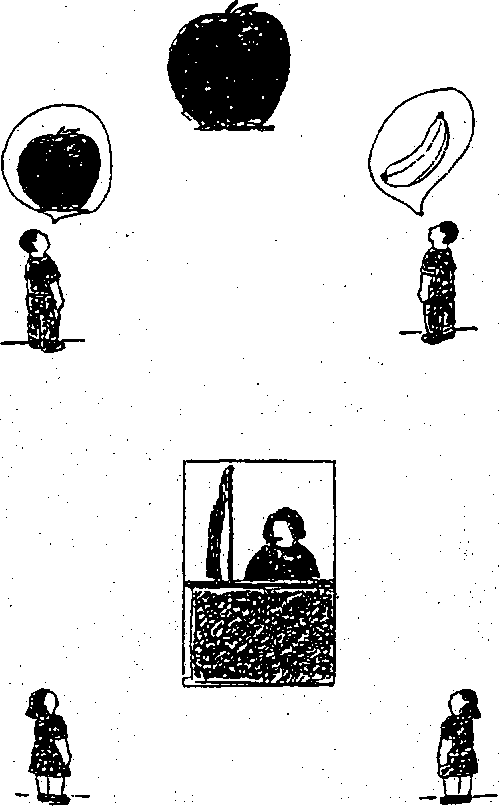
Figure 2. Stimuli used in the (top) reality task and the (bottom) morality task in Study 2.
child told the truth or told a lie. We believed that motivational difficulties might be reduced by the task because participants were not required to identify the experimenter or themselves as a liar. Moreover, the pictures made it clear that someone was a liar, and the participant merely had to identify which one. Finally, by visually depicting what each story child said about the object, we hoped to minimize the processing requirements of the task.
To compare children's understanding of the meaning with their understanding of the morality of the truth and lies we constructed a "morality" task that was similar to the "reality" task. In these stories, we showed children pictures that depicted an authority figure and two story children (see Figure 2, bottom). We told participants that one child told the truth to the authority figure and one child told a lie, and we asked the participants to identify which story child had behaved immorally.
In addition to the issues raised by the results in Study 1, we addressed several other issues in Study 2. The first concerns use of the words "truth" and "lie". We suspected that children might understand the distinction between statements that match reality and statements that do not, but fail to map that distinction onto "truth" and "lie". On the one hand, Strichartz and Burton (1990) found that 3-year-olds were poor at distinguishing between truth and lies, whereas 3-year-olds frequently distinguish between what is "real" and "not real" (Woolley & Wellman, 1990) and understand that one "knows" what is true and "pretends" what is not (Lillard & Flavell, 1992). On the other hand, the stories used by the researchers showed understanding among 3-year-olds were much simpler than those in Strichartz and Burton (1990), making it possible that a simpler task would find similar understanding across the various terms. Therefore, we examined whether children's comprehension differed depending on whether they were asked about "truth" and "lie" or "right" and "wrong".
26
In a similar vein, we also tested children's understanding of the wrongfulness of lying by using different terminology, asking children to either identify lying as "bad" or a liar as the person who would "get in trouble." The reader will recall that in the first study, we asked children to identify lying and truth-telling as "good" or "bad" and the authority figure's reaction to lying as "happy" or "mad."
Particpants
Participants in this study were drawn from the same population as in Study 1. None of the participants in Study 1 (including pilot participants) were asked to participate in this study. Of 112 participants asked to participate, 101 agreed to do so. Four of the participants were excluded due to experimenter error, and 1 had to return to foster care and was unable to complete the task. The final sample consisted of 96 children, forty-eight 4-year-olds and forty-eight 5-year-olds. The 4-year-olds (24 boys and 24 girls) ranged from 4-0 to 4-11 (M= 4-5); the 5-year-olds (25 boys and 23 girls) ranged from 5-0 to 5-11 (Af=5-6).
Reality stories. The experimenter showed the participant six illustrations of two children (either both boys or girls) on either side of a familiar object (e.g., cat, pizza, teddy bear). Above each story child was a "talk bubble," which contained either a copy of the same object (reduced slightly) or a different object (see Figure 2, top). Each talk bubble was covered with a brightly colored piece of felt, so that the contents of the talk bubble were not visible unless the felt was lifted. For each trial, the experimenter first asked the child to identify the object. If the child could not provide a label, the experimenter gave clues. The experimenter then repeated the label provided by the child and told the child to "Listen to what these boys [girls] say about the [child's label for object]," adding either that "[o]ne of them will say something wrong and one will say something right" or that "[o]ne of them will tell a lie and one will tell the truth." Starting with the story child depicted on the left of the picture, the experimenter told the child what each story child called the object, lifting the felt over each talk bubble. The experimenter then asked the child to identify which story child was telling a lie, telling the truth, saying something right, or saying something wrong. So that the child remembered how each story child labeled the object, the felt over the talk bubbles remained up during this question.
Morality stories. The experimenter showed the child either two boys or two girls speaking to one of three women, who were depicted as a doctor, a judge, or a "lady who comes to see [the child] at home" (identical to the adults in the morality task of Study 1). All story characters were drawn without facial expressions and without racial identification (see Figure 2, bottom). In each story, the professional was identified, and the child was told that the professional "wants to know what happened" to the children. The experimenter then said that one of the children would either "get in trouble" or "say something bad." Starting with the story child depicted to the left of the professional, the experimenter told the child whether each story child "tells the truth," "tells a lie," "says what's right," or "says what's wrong." The child was then asked to identify which story child was "gonna get in trouble" or "said something bad" and was asked to explain his or her response.
These stories were counterbalanced so that children with biases toward choosing a particular story child would perform at chance level. The reality and morality stories were blocked so that the terms "right" and "wrong" were used in three of the six stories of each type and the terms "truth" and "lie" were used in three of the six stories. With the morality stories, children were asked Who was gonna "Get in trouble" on half the stories and who "said something bad" on half the stories. All children were administered the PPVT - R last.
Results
27
Preliminary analyses revealed no effects attributable to order, experimenter, participants' ethnicity, or participants' sex; or whether the terms "truth" and "lie" or "right and "wrong" were used. Results were collapsed across these factors for further analysis.
Reality stories. Children identified which of two story characters lied or told the truth, using the terms "truth," "lie," "right," and "wrong." Overall, the 4-year-olds were 69% correct (M= 4.14, SD = 1.47), and the 5-year-olds were 80% correct (M= 4.79, SD = 1.66). The performance of both the 4-year-olds and the 5-year-olds exceeded chance performance, 4-year-olds, r(47) = 6.38,/?<.001; 5-year-olds, f(47) = 7.47, p<..00\. We tested for both age effects and whether children found it easier to identify truth-tellers than liars. A two-way repeated measures ANOVA, with age as the between-subjects factor and whether the truthful or untruthful character was identified as the within-subjects factor, revealed a significant main effect for age, F(l,94) = 5.6, p< .05, no significant main effect for tmthful/untruthful identification, F(l,94) = 1.52, p > .2, and no significant interaction. In contrast to Study 1, participants did not have greater difficulty with questions about lying than with questions about truth-telling.
To determine the proportion of children who answered all questions correctly, we examined children's individual rates of responding. There is approximately a 2% probability that a child will answer six of six reality stories correctly (with a 50% chance of answering correctly on any single trial). One would expect to see 3 or more out of 48 participants answering six of six trials correctly less than 5% of the time, by the binomial distribution. Whereas only 15% (7) of the 48 4-year-olds answered six of six trials correctly, over half (26) of the 5-year-olds did so. Although the 4-year-olds performed well as a group, it was only by 5 years of age that most children consistently answered correctly.
Morality stories. Children were asked to identify which of two characters "said something bad" or, was "gonna get in trouble." Overall, the 4-year-olds were 73% correct (M= 4.35, SD = 1.45), whereas the 5-year-olds were 87% correct (M= 5.24, SD =1.17). We tested both for age effects and whether the type of question affected children's performance. A two-way repeated measures ANOVA, with age as the between-subjects variable and whether the child was asked who was "gonna get in trouble" or who "said something bad" as the within=subjects variable, revealed a significant main effect for age, ^(1,94) = 11.52, p< .001, no significant main effect for troubleftad, ^(1,94) < 1 and no significant interaction, F(l,94) = 3.47, p<.07. Twenty-seven percent (13) of the 4-year-olds answered all six questions correctly, whereas over half (27) of the 5-year-olds did so. As on the reality stories, 4-year-olds preformed well as a group, and most 5-year-olds answered all questions correctly.
Reality stories versus morality stories. We tested whether children performed better on the morality stories than on the reality stories. A two-way repeated measures ANOVA with age as the between-subjects variable and type of story (reality or morality) as the within-subject variable revealed a significant main effect for age, F(l,94) = 11.93, p< .001, and a significant main effect for type of story, ^(1,94) = 4.37, p< .05, with no significant interaction .F( 1,94) < 1. Inspection of the cell means revealed that children performed better on the morality stories than on the reality stories. Although the interaction between age and type of story was not significant, if one compares the percentage of children at ceiling on each of the two tasks, the difference is more apparent among the 4-year-olds; whereas 15% of the 4-year-olds were at ceiling on the reality tasks, 27% were at ceiling on the morality tasks. In summary, participants had a clearer understanding of the wrongfulness of lying than the meaning of lying.
Language development and performance on the tasks. We also examined children's performance with standardized PPVT - R scores as a covariate to determine whether age and receptive vocabulary
28
independently predicted children's performance. One-way analyses of covariance with age as a between-subjects variable and standardized PPVT - R scores as covariates revealed no effects due to PPVT -R score on either the reality stories, F(l,81) = 2.57, ns, or the morality stories F(l,81) < 1. Standardized PPVT - R scores therefore failed to predict performance independently of age. Success on the tasks appeared to be less dependent on language ability than those in Study 1.
Discussion
We suspected that 4-year-old children's poor performance on the identification task in the first study was attributable to a reluctance to call something the experimenter said a "lie," because of an awareness that it is wrong to lie. The materials in this study were designed so that it was clear that a story character had told a lie (and not the experimenter or the participant), and that the participant merely had to identify the truth-tellers and liars as such. The results showed above-chance performance among event he 4-year-olds, with no difference between identification of the truth and lies. We believe this good evidence that the motivational difficulties were minimized. Among 5-year-olds, a majority of the subjects were at ceiling in correctly identifying the truthful and lying characters.
We also wished to test the hypothesis suggested by Study 1 that maltreated children have a clearer understanding of the wrongfulness of lying than the meaning of lying. We did so by making the task that assessed understanding of morality comparable to the task assessing understanding of the meaning of lying. Our results supported this hypothesis, because performance was superior on the morality task. This finding might appear to confirm Piaget's (1932/1965) observation that children initially conceive of lying as "naughty words." However, Piaget asserted that "[fjhe child who defines a lie as being a 'naughty word' knows perfectly well that lying consists of not speaking the truth" (pp. 141 - 142), and that application to naughty words of allsorts involved an overextension of the word "lie." In contrast our finding suggests that maltreated children initially understand that lies are naughty words without understanding that lies are untrue.
Our tasks provide a sensitive means of assessing young children's competence to take the oath. Among nonreferred children from a university preschool, we have found above-chance performance by children as young as 3 years of age (Lyon & Saywitz, 1999). Previous research with nonreferred children suggested that understanding of the objective difference between the truth and lies - that truth corresponds to reality whereas lies do not - does not appear until 4 years of age (Strichartz & Burton).
In Study 2 we did not find that children's performance was affected by the choice of words used to describe truth and lies. Piloting suggested that "real" and "just pretend" were no easier than "truth" and "lies," and the results showed that "right" and "wrong" were no easier either. Because "right" and "wrong" were not appreciably more difficult, however, we would recommend that professionals assessing children's understanding attempt to test understanding using various terms.
General Discussion
These studies demonstrate that despite seriously delayed vocabulary skills, most maltreated children by 5 years of age have a basic understanding of the meaning and morality of lying, but that their apparent understanding is largely dependent on the way in which that understanding is assessed. The results have clear implications for professionals questioning children about their capacity to take the oath. Most children who can identify truthful statements and lies cannot provide minimally sufficient definitions of "truth" and "lies" or explain the difference between the terms. Even the identification of lies can be difficult, insofar as young children are reluctant to discuss lying. Asking children to
29
identify which of two characters is lying is a sensitive means by which their understanding of the truth and lies can be assessed.
With respect to the morality of lying, children may find it difficult to explain why lying is bad or makes authority figures angry, even though they may appreciate that this is so. Asking them forced choice questions (choosing between "good" and "bad" or "happy and "mad") or asking them to choose which of two characters will "get in trouble" or "said something bad" is am ore sensitive means of testing their understanding of the morality of lying.
The serious delays in productive vocabulary exhibited by our maltreated participants underlines the importance of testing children actually appearing in court. Research on nonreferred children from predominantly upper middle-class homes may be inapplicable to many child witnesses. If the tasks assessing competence ask open-ended questions, maltreated children are likely to find it particularly difficult to qualify. Our findings emphasize the need for practitioners to be sensitive to child witnesses' unique vulnerabilities and for researchers to be attentive to the effect of their participants' backgrounds on their performance.
References
Barnett, D., Manly, J.T., & Cicchetti, D. (1993). Defining child maltreatment: The interface between policy and research. In D. Cicchetti & S.L. Toth (Eds.), Child abuse, child development and social policy (pp. 7 - 73). Norwood, NJ: Ablex.
Beitchman, J. H., Zucker, K. J., Hood, J. E., DaCosta, G.A., & Akman, D (1991). A review of the short-term effects of childhood sexual abuse. Child Abuse & Neglect, 15, 537 - 556.
Bussey, K. (1992). Lying and truthfulness: Children's definitions, standards, and evaluative reactions. Child Development, 63, 129- 137.
Ceci, S. J., & Bruck, M. (1995). Jeopardy in the courtroom: A scientific analysis of children's testimony. Washington, DC: American Psychological Association.
Digre, P. (1994, December). Statistical report. Los Angeles: Los Angeles County Department of Children and Family Services.
Dunn, L. M. (1981). PPVT-R manual for forms L and M. Circle Pines, MN: American Guidance Service.
Flavell, J. H., Miller, P.M., & Miller, S.A. (1993). Cognitive development (3rd ed.). Englewood Cliffs, NJ: Prentice Hall.
Flin, R. H., Stevenson, Y., & Davies, G. M. (1989). Children's knowledge of court proceedings. British Journal of Psychology, 80, 285 - 297.
Haugaard, J. J., Reppucci, N. D., Laird, J., & Naufal, T. (1991). Children's definitions of the truth and their competency as witnesses in legal proceedings. Law and Human Behavior, 15,253 - 271.
Hoffman-Plotkin, D., & Twentyman, C.T. (1984). A multi-modal assessment of behavioral and cognitive deficits in abused and neglected preschoolers, Child Development, 55,794 - 802.
30
Huffman, M. L., Warren, A., & Frazier, S. (1998, March). Truth/lie discussions in sexual abuse interviews with children: "The truth or not the truth. " Paper presented at the meeting of the American Psychology Law Society, Redondo Beach, CA.
Lillard, A.S., & Flavell, J. H. (1992). Young children's understanding of different mental states. Developmental Psychology, 28, 626 - 634.
Lyon, T.D., & Saywitz, KI. J. (1999). Young children's understanding of the meaning and morality of lying. Manuscript in preparation.
Mueller, C. B., & Kirkpartick, L. C. (Eds.). (1998). Federal rules of evidence. New York: Aspen.
Myers, J. E. B. (1997). Evidence in child abuse and neglect cases. (3rd ed.). New York: Wiley.
Peterson, C.C., Peterson, J. L., & Seeto, D. (1983). Developmental changes in ideas about lying. Child Development, 54, 1529- 1535.
Piaget, J. (1932/1965). The moral judgment of the child. New York: Free Press.
Pipe, M. - E. & Wilson, J.C. (1994). Cues and secrets: Influences on children's event reports. Developmental Psychology, 30, 515 - 525.
Saywitz, K., Jaenicke, C, & Camparo, L. (1990). Children's knowledge of legal terminology. Law and Human Behavior, 14, 523 - 535.
Smith, B. E., & Elstein, S.G. (1993). The prosecution of child sexual and physical abuse cases: Final report. Washington, DC: National Center on Child Abuse & Neglect.
Strichartz, A.F., & Burton, R.V. (1990). Lies and truth: A study of the development of the concept. Child Development, 61,211 - 220.
Wimmer, H., Gruber, S., & Perner, J. (1984). Young children's conception of lying: Lexical realism -moral subjectivism. Journal of Experimental Child Psychology, 37, 1 – 30.
Woolley, J. D., & Wellman, H.M. (1990). Young children's understanding of realities, nonrealities,
and appearances. Child Development, 61, 946 - 961. Received May 27,1998 Final revision received September 29,1998 Accepted September 29, 1998
end
2004 American Prosecutors Research Institute